


Sports Team Travel Case Study for DC Teams
A tournament weekend can unravel before the first whistle. One late airport pickup, a coach stuck searching for bus parking, or parents receiving three different meetup messages can turn a promising trip into a stressful one. This sports team travel case study looks at how a youth team visiting Washington, DC can turn transportation and downtime into a better experience for athletes, families, and coaches.
The scenario is representative of the challenges sports and AAU teams face when traveling to the nation’s capital. The details will vary by sport, tournament schedule, roster size, hotel location, and budget. The lesson stays the same: when one person owns the transportation plan, the team has more time to compete, recover, and enjoy DC.
The Challenge: Moving a Team Without Losing Time
Picture a 42-person youth basketball group arriving in Washington, DC for a three-day tournament. The group includes 15 athletes, two coaches, a trainer, and family members traveling on different flights. Their hotel is outside the immediate tournament area, games begin early, and several families want to see the monuments before leaving town.
At first, the plan sounds simple: use rideshares, rent cars, and meet at the venue. But that choice creates separate arrival times, separate parking decisions, and separate bills. It also adds pressure to the coach, who should be preparing players instead of tracking drivers and answering location texts.
For a sports team, transportation is not just a ride from point A to point B. It affects warm-up time, athlete energy, parent confidence, meal timing, equipment handling, and the group’s ability to stay together. In a city with busy streets, security zones, event traffic, and limited parking near popular sites, an unplanned approach can cost more than it saves.
The Travel Plan: One Schedule, Clear Responsibilities
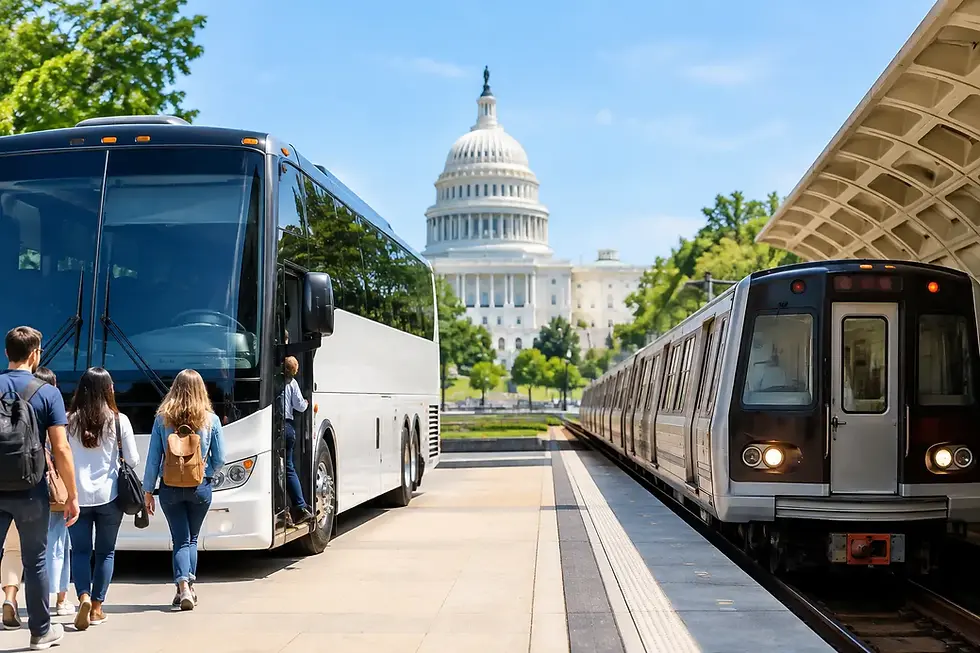
The team organizer chose a private motor coach for the full group rather than dividing everyone into smaller vehicles. The coach was large enough for passengers, carry-on bags, coolers, and team gear, while a coordinated itinerary gave the group one source of truth for pickup times and locations.
Before the trip, the organizer collected flight details, hotel information, tournament addresses, athlete emergency contacts, and the coach’s preferred meal windows. Those details were used to build a schedule with realistic buffers. A 9:00 a.m. game did not mean a 9:00 a.m. arrival. It meant a departure time that allowed for traffic, unloading, restroom needs, and a calm pregame routine.
The plan also separated must-do travel from optional activities. Airport transfers, game transportation, and the final departure were non-negotiable. A guided evening tour of the monuments was scheduled only after the first day’s games, when the team had time to enjoy it without feeling rushed.
That distinction matters. Teams should not pack every open hour with activities. Athletes need food, rest, and flexibility. A well-planned sightseeing experience should feel like a reward, not another obligation on the itinerary.
Why a Single Vehicle Changed the Weekend
The biggest improvement was visibility. Coaches could see that athletes were present before leaving the hotel. Families knew where to meet. Players traveled together, rather than arriving at different times and trying to find one another in an unfamiliar venue.
A single vehicle also made communication easier. Instead of sending updates to multiple drivers, the team manager shared one departure time and one pickup point. If a tournament schedule shifted, the transportation plan could be adjusted from a central contact rather than through a chain of group texts.
There is a trade-off, of course. A full-size coach is not always the best fit for a small roster. A 15-passenger van may work well for a compact team with limited gear, while a mini bus can be a smart middle ground for smaller groups. For executives, recruiters, or VIP guests, Black Suburbans may be the better choice. The right vehicle depends on headcount, luggage, equipment, budget, and how many separate pickup points the group needs.
Game Day: Protecting the Team’s Routine
On the first morning, the team departed the hotel with extra time built in. The driver handled navigation and drop-off logistics while coaches reviewed game plans and athletes focused on the day ahead. No one had to worry about whether a parent had found parking or whether a rideshare had canceled at the last minute.
After the game, the coach avoided immediately moving the group into sightseeing. Players returned to the hotel for lunch, recovery, and downtime. That decision was as valuable as the transportation itself. Young athletes often arrive at a tournament excited, tired, and overstimulated. A schedule with breathing room can help them perform better than a packed itinerary ever will.
Later that evening, the group boarded the coach for a Washington, DC monuments tour. Seeing the Lincoln Memorial lit at night, walking near the Vietnam Veterans Memorial, and viewing the U.S. Capitol gave families a shared experience beyond the tournament. For athletes who had never visited DC, the city became part of the story of their season.
RSN Tours can help groups pair reliable transportation with guided sightseeing around the National Mall, creating a trip that is organized from the airport transfer through the final monument stop.
What the Organizer Learned
The most successful part of the trip was not the bus itself. It was the decision to plan transportation early and treat it as a core part of team operations. The organizer did not wait until the week of travel to ask who needed a ride. They established a schedule, a group contact, and a clear expectation that the team moved together.
The organizer also learned that every itinerary needs contingency time. Tournament games can run late. Flights can be delayed. Players may need an extra stop for food or supplies. A transportation partner and schedule that leave room for changes are more valuable than a plan that looks perfect on paper but breaks at the first delay.
For parents, the benefit was peace of mind. They could enjoy the trip without driving through unfamiliar streets or trying to coordinate parking around busy venues. For coaches, the benefit was focus. They had more time for athletes and less time managing logistics. For players, the benefit was simple: they arrived together, prepared, and ready to represent their team.
Planning Tips for Your Team’s DC Trip
Start by confirming your true passenger count, not just the number of athletes. Include coaches, trainers, parents, siblings, and any chaperones who expect to travel with the group. Then consider luggage, sports bags, coolers, and equipment. A vehicle that technically fits everyone may not be comfortable once gear is loaded.
Next, build the schedule around the tournament, not around sightseeing. Put game transportation first, then meals and recovery, then optional activities. Washington, DC has plenty to see, but your team does not need to see everything in one weekend. One well-timed tour can create a memorable experience without draining the group.
Finally, give everyone one itinerary before departure. Include flight arrivals, hotel pickup points, game departure times, a coach or manager contact, and expectations for being ready. Clear details prevent the small misunderstandings that cause big delays.
Make the Travel Part of the Win
A sports trip is about more than the final score. It is about how athletes carry themselves, how families connect, and how a team handles a new environment together. Organized transportation gives your group the confidence to arrive on time, travel safely, and make room for the moments that become team memories.
If your team is headed to Washington, DC, plan the ride early, keep the schedule realistic, and leave room for a little inspiration between games. Let’s plan your next journey with the same focus your team brings to the court, field, or track.


Comments